As of October 2013, I have enrolled myself on a MOOC (Massive Open Online Course) offered by the University of Texas at Austin through edX. The classes will cover many aspects of globalisation, and I am expected to write 11 essays in order to pass. This is the fourth written assignment I have done for the course. It is about the role of the offshore tax havens (OTHs) in the current global economy.
Note: This text has also been used by me at another course at edX, Principles of Written English.
By the end of the Second World War, most of the previously colonised regions of the planet conquered their independence. Those which could not free themselves from foreign domination were supported by the United States and the Soviet Union –superpowers eager for areas of influence –, what contributed to the creation of autonomous states. In this context, countries such as Saint Kitts and Nevis were able to consolidate their sovereignty. One of the consequences of this process was the foundation of offshore tax havens (from now on referred to as OTHs), places where governmental taxation is below international standards. While many people believe these areas are just exotic islands; in fact, they constitute a substantial part of the global economic system.
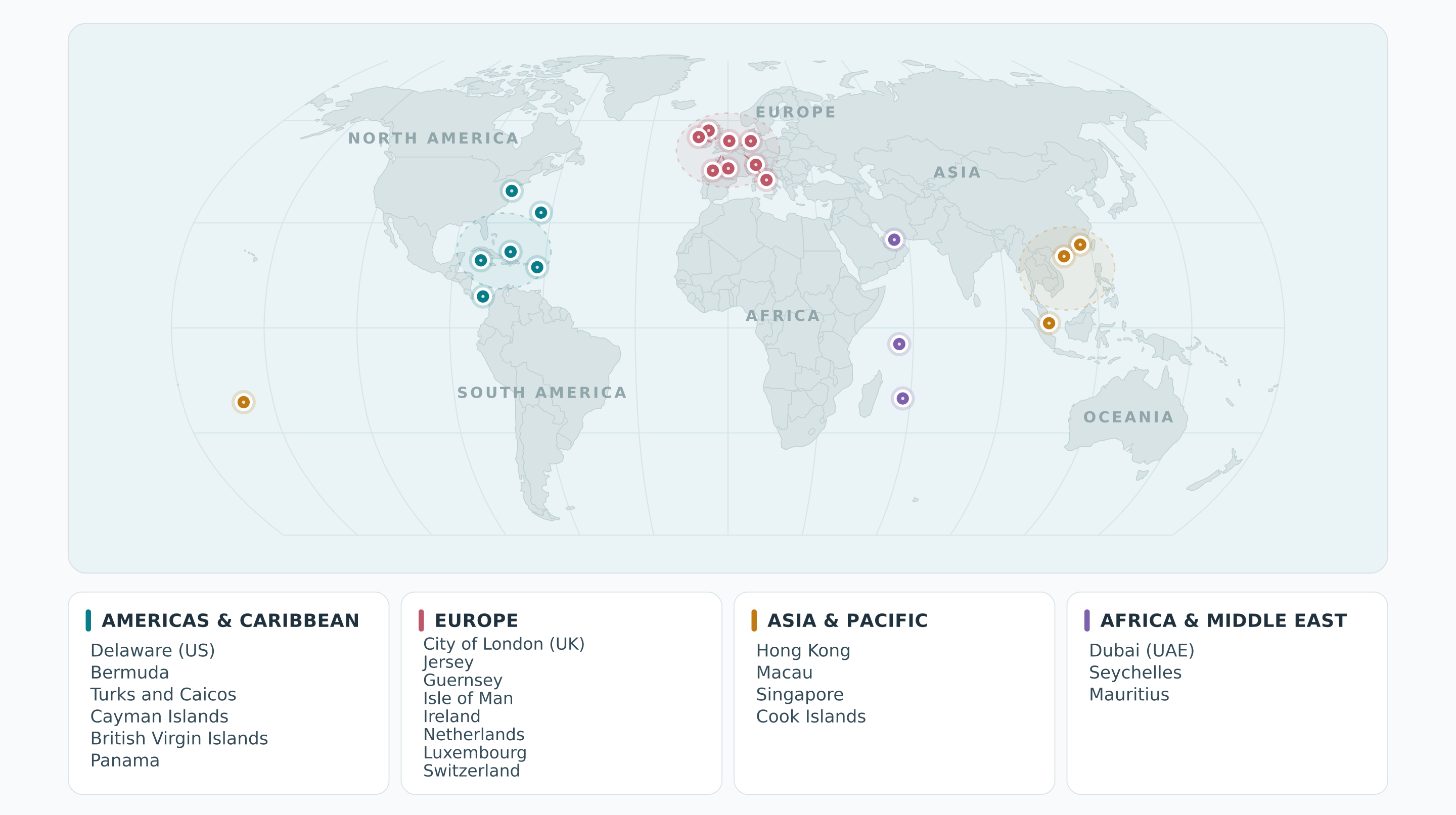
In 1989, seven wealthy countries devised a Financial Action Task Force, which would be in charge of fighting OTHs. The contradiction, however, is that these nations, as reported by the British journalist Nicholas Shaxson, actually control the offshore world. The reporter claims that “the most important secrecy jurisdictions are OECD countries, notably the United States and Great Britain, hosting offshore sub-jurisdictions such as Delaware and the City of London, and offshore satellites such as the Cayman Islands and Jersey”. They have an interest in ensuring the existence of an obscure set of economic networks overseas, so as to hide their elites’ fortune from public knowledge. Thus, these privileged groups are able to conduct whatever activities they want to, as there will be no scrutiny over their operations.
As a result of this permissiveness promoted by the OTHs, money laundering is facilitated. Not only do big companies avoid paying taxes to the governments of where they are based, but they also make sure to maximise these savings. Due to this, a large amount of capital that should have been used to improve each state is, in fact, redirected to other locations. This contributes to the worsening of social conditions in emerging nations, as well as to the budget issues that are affecting many countries. Consequently, social justice – the achievement of decent living conditions, gainful employment, civil liberties and social opportunity for all people, rather than for a particular social class or elite – is hindered. Tax havens, therefore, help to maintain the existing disparities between the rich and the poor.
Another issue prompted by the proliferation of OTHs is the establishment of international crime networks, such as drug trafficking and terrorist rings. These law-breaking institutions take advantage of the secrecy and convenience of the offshore banking system to escape from police authorities. On the one hand, the disrespect of laws becomes harder to be traced and effectively punished, what causes exorbitant losses to the nation state: according to Shaxson, developing countries lost up to one trillion dollars in illicit financial outflows in 2006. On the other, as marginalised groups of society become powerful, they undermine public security efforts. It can be seen, thus, that OTHs may also bring about lasting changes to the consolidation of social order, because they are invaluable assets to organised crime.
The offshore tax havens, in spite of the criticism that permeates them, are already interconnected to the global economy. These “financial islands” have been widely praised, but they jeopardise the accomplishment of universal equity and development. Although the OTHs receive a myriad of foreign capital, they still are known to be underdeveloped territories, places that are outside the scope of international governance. Their exclusion from the monitoring of supranational organisations is intentional: this way, they can retain their economic structures. The absence of taxes also comes with the lack of any control over the practises that occur within the OTHs’ premises. They are the ultimate symbol of the deregulation trend sponsored by the globalisation process.
Originally published on thimabi.wordpress.com.