

In 2002, American historian Walter Laqueur affirmed that no concept can contain all the varieties of terrorism which have existed throughout history. Since French Revolution and its jacobin “La Terreur” until the birth of Al-Qaeda, global geopolitics has frequently been altered by the most diverse terrorizing acts. Alex Schmid, Dutch specialist in terror institutions, has proposed the following definition to the United Nations (UN)1:
“Terrorism is an anxiety-inspiring method of repeated violent action, employed by (semi-) clandestine individual, group or state actors, for idiosyncratic, criminal or political reasons, whereby – in contrast to assassination – the direct targets of violence are not the main targets. The immediate human victims of violence are generally chosen randomly (targets of opportunity) or selectively (representative or symbolic targets) from a target population, and serve as message generators. Threat- and violence-based communication processes between terrorist (organization), (imperilled) victims, and main targets are used to manipulate the main target (audience(s)), turning it into a target of terror, a target of demands, or a target of attention, depending on whether intimidation, coercion, or propaganda is primarily sought” – Schmid and Jongman, UN (1988)
The Dutch theorist’s proposal summarizes the dehumanized aspects of terrorism, which affects individuals not directly related to the exposed cause. This problematic was one of the main factors which have allowed terror proliferation in the past, because intelligence services could not yet predict the possibility of a random attack. Currently, however, this scenario is not present. The expansion of democracy around the globe, as well as the advent of technology, has allowed a greater governmental monitoring of terrorist networks, what in theory would contribute to the increment of security.
The appearance of uni-multipolarity, characterized by North American military supremacy and by the diffusion of global economy in several intertwined spots, has helped information exchange in global scale. Alliances between professional armies, which have originated from the Holy Alliance (composed by Austria, Russia and Prussia), became even simpler after globalization. Mutual cooperation is widely adopted. American military exercises with South Korea, for example, are considered a long-term tradition.

9/11 attacks in New York proved the necessity to reinforce social security. What was needed, was done, by implementing more rules for civil aviation. Additionally, War on Terror, devised by George Bush’s government, represented the direct combat against terrorist entities. There was even the designation of an “Axis of evil”, which would be responsible for supporting these organizations 2. Counter-terrorism units surged, and the American society was led to believe in the end of another extremist attack.
Boston Marathon bombings, however, succeeded in escalating controversies regarding the level of protection that Western societies have. In many developed nations, suspected citizens are inefficiently monitored. Months before the World Trade Center was brought down, CIA’s assistant director James Monnier Simon Jr. alerted presidency: “American intelligence has problems”. The United States Department of Defence still has issues.
Certainly, there have been major improvements in public defence mechanisms after the attacks. The US federal government responded to the tragedy in Boston isolating the city and rapidly identifying the responsible persons. In a digital era, in which everything can be recorded extremely easy, photographs were crucial for the apprehension of the Chechen terrorist. Civil society, without a doubt, was essential for the case’s solution.
However, even conducting an investigation about Tamerlan Tsarnaev in 2011, FBI could not hinder detonations, just arrest the responsible after the crime was committed. The criminals took advantage of an act of opportunity. Although the US government has not yet discovered a motive for the attack, it can be inferred that these Kyrgyz brothers were looking forward to hit a public space, hence a hard to protect. The realization of a marathon in the city with the world’s biggest GPD has another advantage: immediate exposure in the media.
It should be noted, therefore, that terrorism in this century is not primarily based on state practices, as happened during Robespierre’s regime in France. Even though Osama bin-Laden is dead, due to an illegal operation conducted by American SEAL’s in Pakistan, Al-Qaeda is still active in the North of Africa. In 2010, Faisal Shazad tried to explode a vehicle in Times Square, New York’s symbol of capitalism. A year later, South Sudan was recognized as a country by the United Nations, throughout a genocide of non-Islamic groups in Darfur.
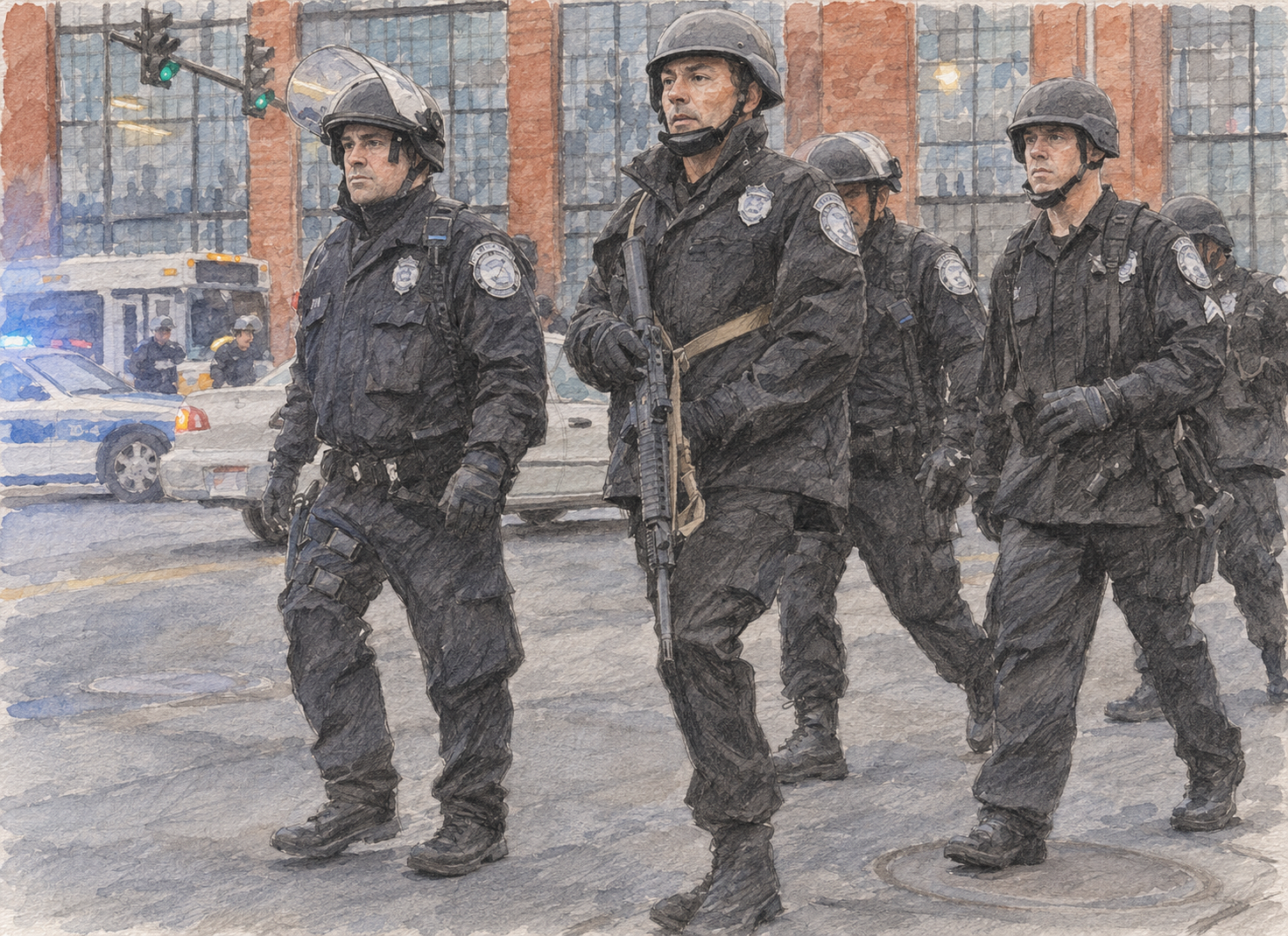
Terrorizing acts of the 21st century have transformed in normal scenes of elite policemen, like SWAT squads, patrolling high developed cities. Some regions – Middle East, for instance – are so used to terror threats that disasters are not very covered by media. On the other hand, when heavily protected places are still attacked, there is a confirmation that investing in war may not be as efficient as it seems. In this context, initiatives like the one from Barack Obama – who tries to accomplish peace between Western societies and Muslim communities – are extremely important.
Sources and related articles
What’s behind the attacks in Boston? (by Thiago Bittencourt)
Terrorism: A brief history (by Walter Laqueur)
O conceito de terrorismo nos jornais americanos (in Portuguese)
Paquistanês admite culpa por tentativa de ataque à Times Square (in Portuguese)
Legacy of Ashes (2008, by Tim Weiner)
Originally published on thimabi.wordpress.com.
-
Schmid’s proposal consisted of a summary of academic perspectives regarding terrorism, a compilation of the opinion from several historians, geographers and other specialists. ↩︎
-
The Axis of Evil is an expression defined by former president George W. Bush in his State of the Union Address in January 29, 2002, in which he was referring to anti-American countries that could possess nuclear weaponry programmes. ↩︎